

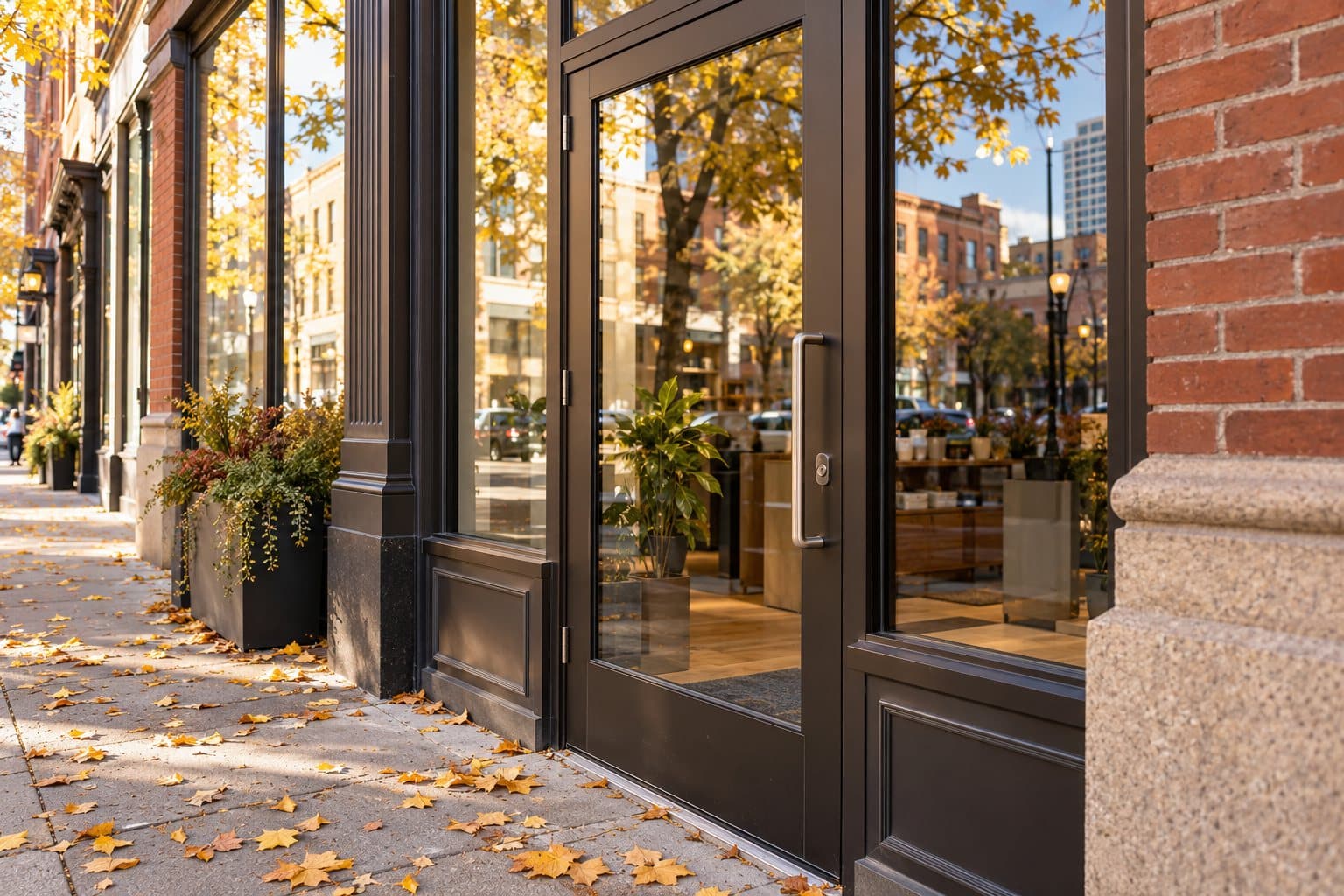
If a storefront door will not latch in Downtown Denver, first distinguish a door that stops short of the frame from a latch that fails to engage. Check for a loose mat or visible obstruction, record how the door behaves, and contact the building manager or a commercial locksmith. Do not force the key, increase closer power blindly or add a barrier across an occupied exit.
The last customer has left, the lights are going off, and the entrance looks closed. Then a light pull opens it again. That is a different problem from a lost key: the door has reached the frame without securing the opening.
Autumn is a useful time to catch this fault before colder weather and busy holiday trading. A Downtown Denver shop may have an aluminum storefront, paired entry doors, a shared lobby or an electrified strike. Each needs a different repair. Use the observations below to explain the problem clearly and avoid replacing a good lock while leaving the real fault untouched.
The first five minutes: make the opening safe
- Keep the exit usable. Do not chain handles, wedge the door shut or fit an improvised padlock while people are inside. If safe exit is impaired, stop using the affected area and involve the building’s responsible manager immediately.
- Look for simple obstructions. A folded entrance mat, delivery packaging or loose debris at the threshold can prevent closure. Remove an ordinary loose obstruction only if it is safe; do not pry at the door or dismantle hardware.
- Identify the failure. Does the door stop several inches open, touch the frame and bounce back, scrape the threshold, or close normally but remain unlocked?
- Record the conditions. Note the time, weather, which entrance was used and whether another exterior door or the HVAC system was operating. These are clues, not a diagnosis.
- Call with the right scope. Tell the provider that the business cannot secure its entrance. Ask whether the visit covers the actual lock, closer, pivots or electronic hardware involved.
Star-Keys provides commercial locksmith service in Denver. Call (303) 747-6324 to describe the door and confirm availability, the service scope and an arrival estimate.
What the symptom can tell you
Observe a normal closing cycle from a safe position without putting fingers near the hinge or latch. Avoid repeated tests if glass, pivots or hardware look loose. The table helps organize a service call; it does not establish which part has failed.
| Observed symptom | What needs checking | What to avoid |
|---|---|---|
| Door stops before reaching the frame | Obstruction, closer operation, seals, rubbing and building pressure | Assuming a new cylinder will make it close |
| Door touches the frame, then bounces open | Latch-to-strike alignment, latch movement and closing control | Slamming it harder to get through closing time |
| Key works with the door open but binds when closed | Door alignment and load on the bolt or latch | Using the key to pull the door into position |
| Door scrapes or needs lifting | Hinges or pivots, frame condition and clearance | Grinding the strike before identifying why alignment changed |
| Reader grants access, but the door does not release or secure | Mechanical alignment plus strike, wiring and control-system operation | Changing access schedules to conceal a mechanical problem |
| One leaf of a pair does not close correctly | Both leaves, meeting edges and any coordinating or latching hardware | Testing only the leaf customers normally use |
Why a door that worked yesterday can fail today
The lock and frame no longer meet cleanly
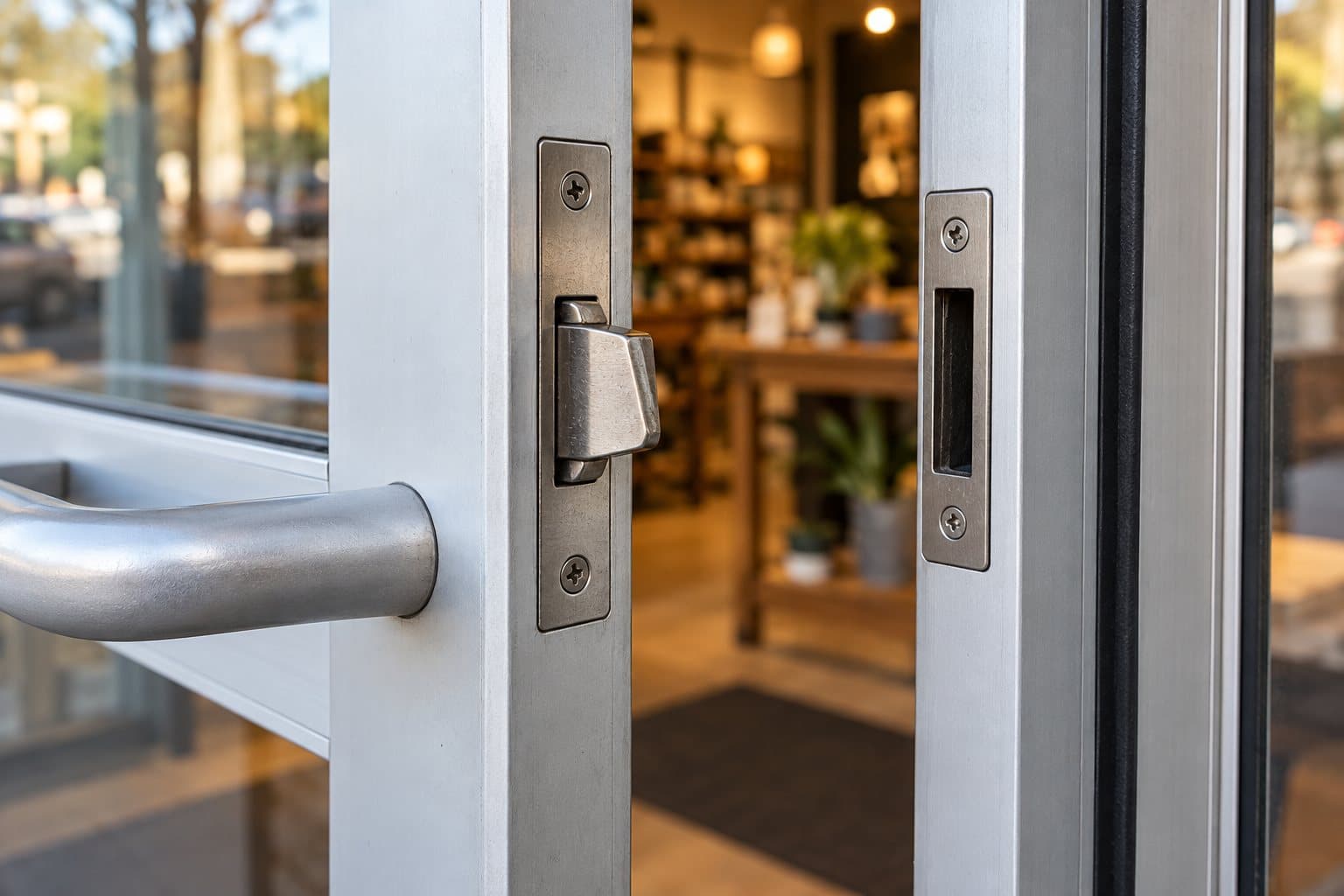
Hardware wear, loose mounting or door movement can change the relationship between the latch and strike. A narrow gap at the hinge side can become a noticeable mismatch at the opposite edge. Photograph rubbing marks or uneven gaps, but let the technician determine whether the cause lies in the door support, frame or lock.
A focused door-lock repair assessment should separate an internal lock fault from a fit problem. Ask the technician to show you the cause before authorizing replacement parts.
The closer is not controlling the final part of travel
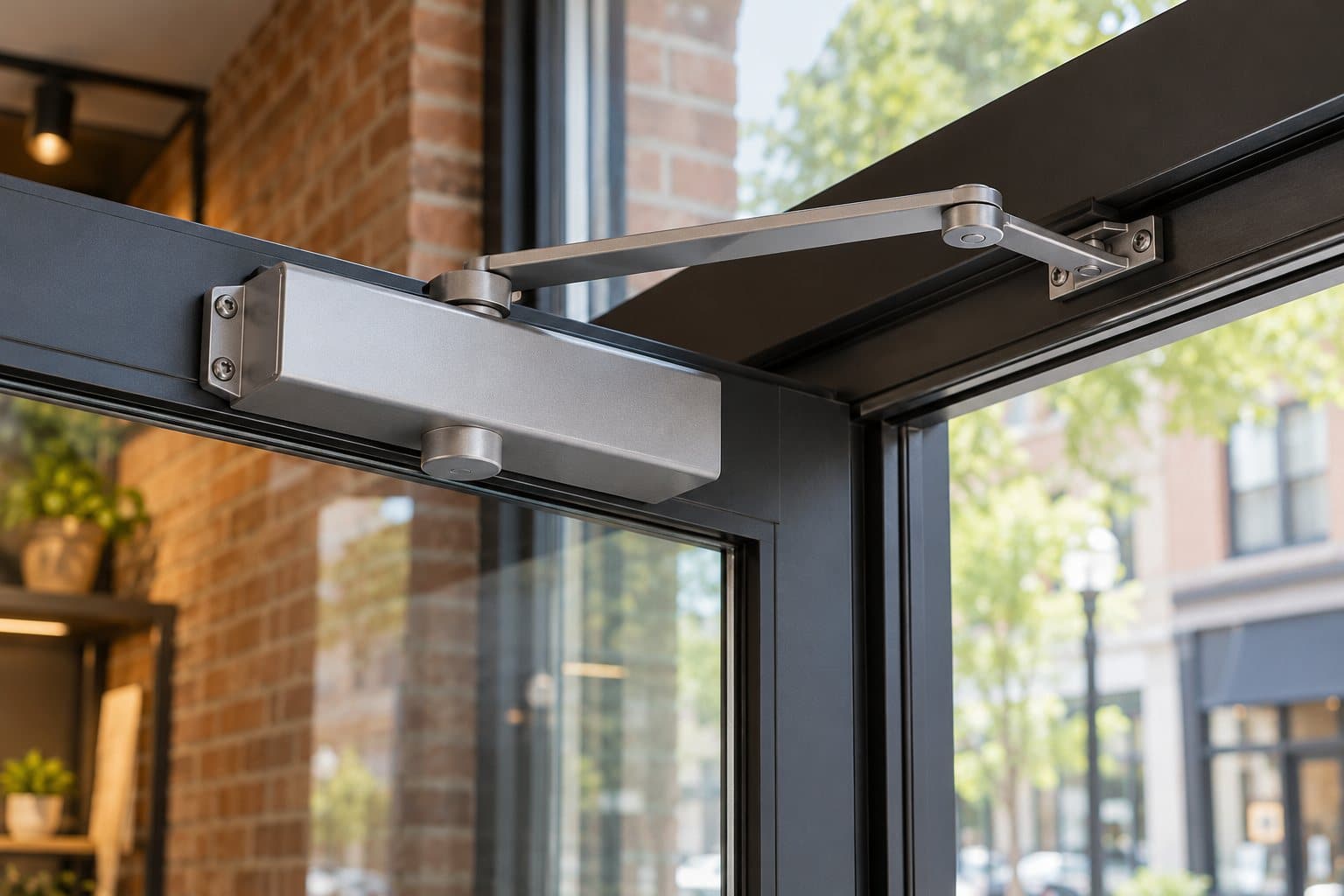
The closer brings the door toward its closed position. Its adjustment is not interchangeable with repairing a worn latch or correcting a sagging door. Closing speed and closing force are also different settings; a door moving faster does not necessarily gain the right latching force.
Do not turn unidentified adjustment screws. Settings, limits and mounting arrangements vary by model, and excessive adjustment can damage a closer or make the entrance difficult to use. Oil leakage, a loose arm or sudden slamming merits professional inspection.
Air pressure or weather exposes a marginal setup
Wind and differences in air pressure can affect how a door closes. A useful clue is a fault that appears only when another entrance opens or an exhaust system runs. That does not prove the closer is defective; the building manager may need to coordinate a hardware technician and an HVAC contractor.
Likewise, a problem noticed on a cold morning is not automatically a frozen cylinder. Document what changed. The repair should address the observed cause rather than rely on a seasonal explanation.
Downtown Denver: coordinate the repair before dispatch
For a street-facing shop near Union Station or in LoDo, give the exact entrance and nearest cross street. For an office in a shared building, include the suite, lobby access arrangements and a contact who can authorize work. A street address alone may lead to the wrong side of a large property.
Confirm with the landlord who controls the storefront hardware and whether there is an approved contractor or hardware specification. Explain any loading access, parking restrictions or building access window before the appointment. Do not promise a technician a loading bay that the building has not authorized.
Security repairs must preserve the door’s required exit function. Fire-rated assemblies and electrically controlled openings can involve additional requirements. Denver’s plan review, permits and inspections resources are the official starting point for checking the applicable process with the city. A blog cannot determine whether a particular alteration needs approval.
Repair, replace or investigate the access-control system?
Repair or adjustment may be appropriate when the existing hardware is sound and the cause is a correctable fit or operation problem. Replacement makes sense when a component is damaged, unreliable, incompatible or unsuitable for the opening. Ask what the proposed part changes and why it is needed.
Review lock replacement options only after the door condition is understood. Rekeying changes which key operates a compatible cylinder; it does not correct a misaligned strike or failed closer.
If the opening uses a reader or electric strike, ask for the mechanical and electronic sides to be assessed together. A green indicator confirms a system event, not necessarily that the door physically released or latched. Any access-control installation or change should fit the door’s intended use and required emergency operation.
Employee permissions are a separate issue. If you also need to remove a former staff member’s access, use our office-key and employee-access checklist alongside the repair plan.
A handover checklist for the repaired entrance
Before signing off, ask the technician and building contact to demonstrate normal operation. Record the hardware serviced and any remaining work another contractor must complete.
- The door closes and engages its intended latch without lifting, pulling or slamming.
- The authorized key or credential works as intended from outside.
- People can leave through the door using the intended exit hardware.
- Both leaves of a paired entrance operate in the required sequence, where applicable.
- Any reader, door-position monitoring or alarm behavior is checked by the responsible provider.
- The closer does not slam, and any opening-force or accessibility concerns have been addressed by a qualified person.
- The closing manager knows which fault to report if the behavior returns.
Frequently asked questions
Why does my storefront door close but not latch?
The door may reach the frame without the latch entering its strike. Possible causes include alignment, latch wear, a closing-control issue or pressure against the door. Record whether it bounces back, rubs or stops short. A technician should inspect the assembly before recommending a new lock.
Will rekeying fix a storefront door that will not lock?
Rekeying changes key access in a compatible cylinder. It does not move the strike, straighten a door or restore a failed closer. If the cylinder itself is faulty, that needs assessment too, but the reason the door cannot secure must be identified first.
Should I make the closer stronger?
Not without understanding the cause and the model’s instructions. More spring force can make the door harder to open, and changing speed is not the same as changing force. The correct solution must balance closing, latching, accessibility and the requirements of the particular opening.
Can cold weather cause a commercial door to stop latching?
Environmental conditions can contribute to an existing fit or operation problem, but timing alone does not diagnose it. Note whether the problem is limited to mornings, windy periods or certain HVAC conditions. Avoid heating hardware with an open flame or using an unspecified lubricant.
What if the door will not secure at closing time?
Contact the responsible building manager and a qualified service provider. Explain whether anyone remains inside and whether safe exit is affected. Do not leave the entrance assumed secure because it looks closed, and do not improvise an occupied-exit barrier. Confirm a suitable temporary plan with the responsible professionals if permanent repair cannot be completed immediately.
Can a locksmith fix the closer as well as the lock?
Some providers service both, but capabilities and parts vary. Send photographs of the complete door and closer when booking. Glass damage, structural frame work, specialized pivots or building-pressure faults may require another contractor. Confirm the scope rather than assuming every doorway repair is included.
How much does storefront door repair cost in Downtown Denver?
A useful quote depends on the failed component, access arrangements, labor and required parts. Request an itemized estimate identifying the service-call charge and any after-hours cost. A cylinder replacement and a closer or pivot repair are different jobs, so a single online price can be misleading.
What should our staff check after the repair?
During the normal closing routine, verify that the door actually secures and that exit hardware still operates as intended. Report new scraping, slamming or a need to pull the door into place. Staff should observe and report; adjustment and maintenance should follow the hardware manufacturer’s instructions and the property’s maintenance plan.
Need help securing a Downtown Denver business entrance? Call Star-Keys Locksmith at (303) 747-6324 with the location, door type and observed symptom.
Published by Star-Keys Locksmith. Images are AI-generated illustrations, not photographs of customer jobs. Technical background was checked against Allegion/LCN door-hardware guidance; exact adjustments depend on the installed product.