

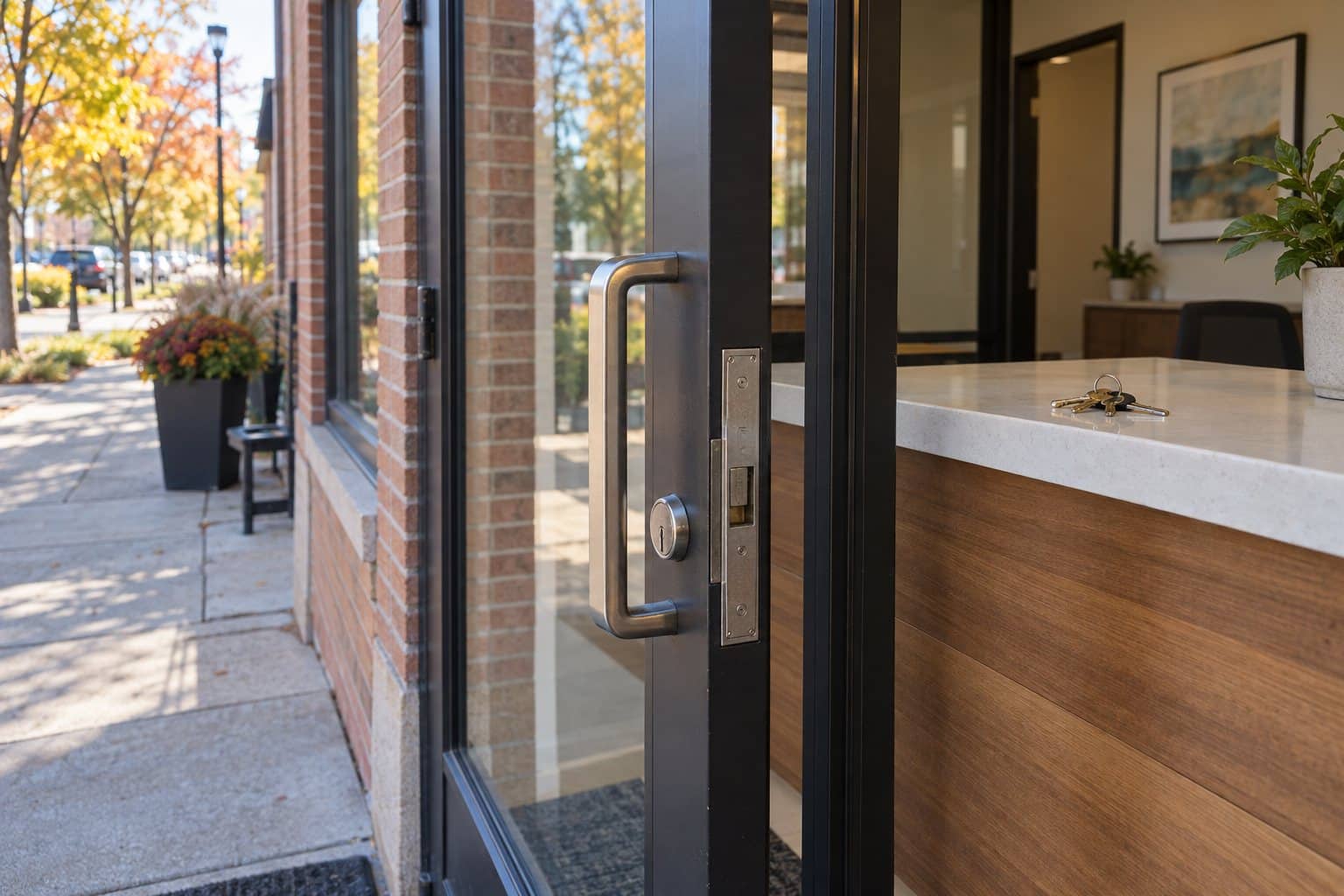
If an employee leaves with office keys, identify every door those keys open, arrange to rekey the affected cylinders, and revoke any separate electronic access. A returned badge or a deleted alarm code does not disable a metal key. In a leased Denver office, involve the property manager before changing building-controlled locks.
The practical question is not whether the departure was friendly. It is whether your business can account for every way into the premises. A key that was never returned, an old shared PIN and a mobile credential need different remedies. Treat the review as a routine part of every departure, without making assumptions about the person leaving.
This checklist is for Denver business owners and office managers who are authorized to manage their premises. It helps you define the locksmith work, coordinate with the building manager and confirm that the next opening shift can still get inside.
Discuss your office locks with Star-Keys: (303) 747-6324
Start with the access that still works
Do not wait for a key-return conversation to finish before finding out what remains accessible. Assign one manager to coordinate the physical-key review, building credentials and alarm changes. Give each action an owner and a completion time.
- List the missing items. Include office keys, master keys, access cards, parking remotes and any keys to storage, filing cabinets or a key cabinet.
- Map each item to its doors. One key may open a front entrance, rear delivery door and stockroom. Counting keys is not the same as counting affected locks.
- Confirm who controls each opening. Your company may manage the suite while a landlord controls the lobby, loading area and garage.
- Revoke individual electronic credentials. Have the authorized administrator remove the departing person’s access and check how the change reaches each door.
- Plan the mechanical work. Ask a locksmith to identify serviceable cylinders, master-key relationships and any damaged hardware before quoting the job.
- Arrange the next shift’s access. Decide who receives replacement keys or credentials and who will test them before everyone leaves.
If there is a threat, an attempted entry or an immediate danger, move to safety and contact emergency services. An unreturned key alone does not establish theft or wrongdoing. Keep the access-control process factual and handle employment disputes through the appropriate company contacts.
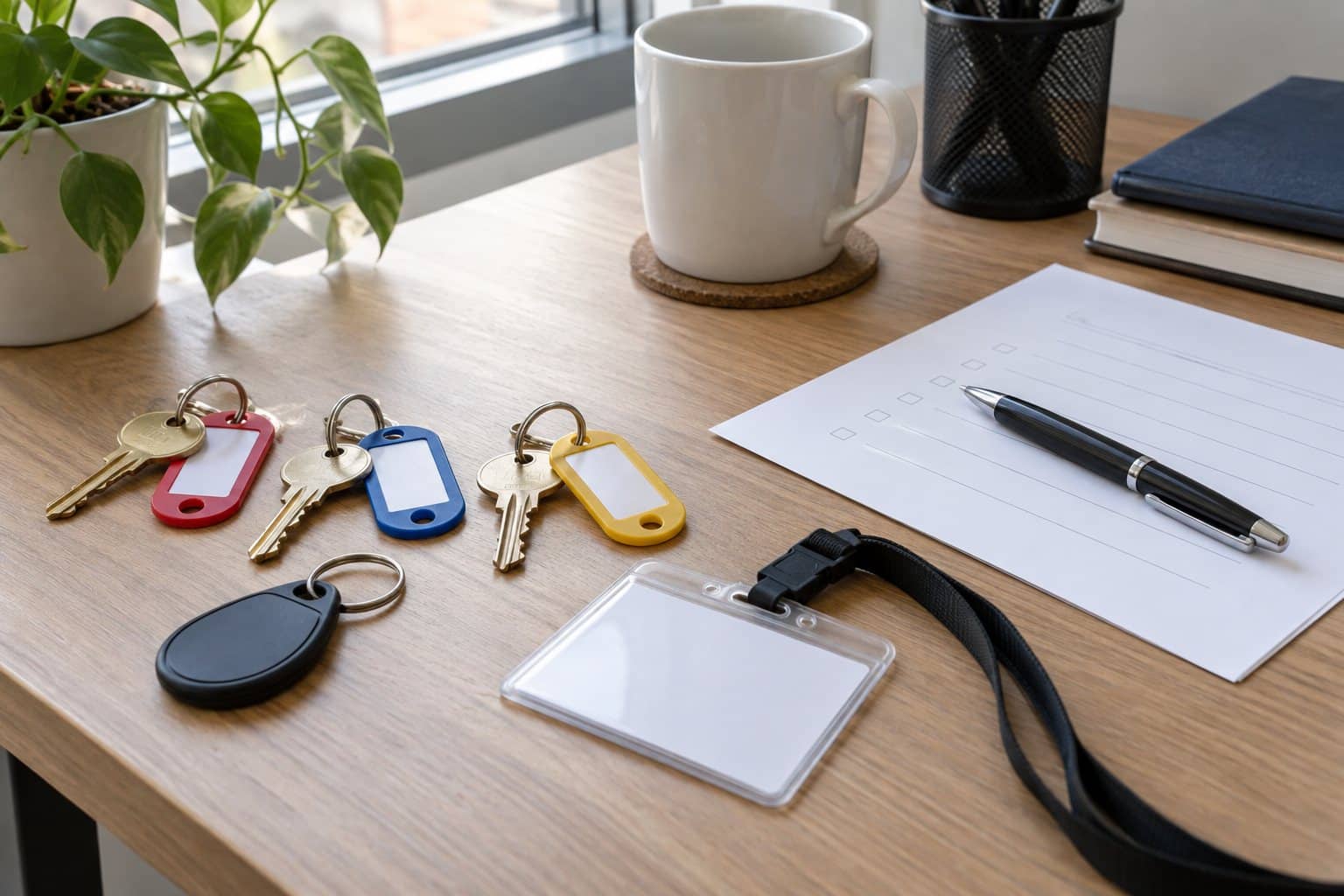
Rekey, replace or revoke: which action solves the problem?
A useful work order describes the access you need to remove. “Change everything” can miss electronic credentials while replacing hardware that still works. “Delete the employee” can leave mechanical keys untouched.
| What remains unaccounted for | Action to discuss | Completion check |
|---|---|---|
| A conventional office key | Rekey each affected, compatible cylinder or replace the cylinder when necessary. | New authorized keys work; the old key no longer works where it must be excluded. |
| A master key | Review the entire group of cylinders it operates with the building manager and locksmith. | The old master is excluded from the affected openings, not just the front door. |
| An individual access card or mobile credential | Revoke it in every applicable access system. | Confirm the update reached the relevant controllers or locks. |
| A shared entry or alarm PIN | Change the shared code and issue individual codes where supported. | Authorized staff can use the replacement; the retired code is rejected. |
| A worn, damaged or unsuitable lock | Assess repair or replacement as well as the key change. | The door closes, latches, locks and releases correctly. |
Rekeying compatible business locks changes which key operates the cylinder while retaining serviceable hardware. It does not repair a damaged door, remove an alarm user or cancel a mobile key. Those are separate items on the same handover list.
Where the mechanism is damaged, parts are unsuitable or a different lock function is needed, discuss lock replacement options. Ask the technician to explain which component needs replacing and why. A missing key does not automatically mean the whole door lock must be discarded.
A missing master key changes the scope
Before booking “one lock,” establish whether the missing key opens one door or a group of doors. A master key may operate several suites or rooms even when each has its own everyday key. Changing a single employee key arrangement does not necessarily exclude a missing master.
Give the locksmith the existing key-system records through a secure channel, if you have them. Ask which cylinders must change, which authorized master access must remain and how the revised system will be documented. If records are missing, allow for an assessment rather than assuming the scope from the number of keys on a ring.
Our master-key system service is the relevant starting point for that discussion. Keep master and control keys limited to people who need them, and store their records separately from general staff documents. Do not publish key-cut photographs, key codes or a detailed access map.
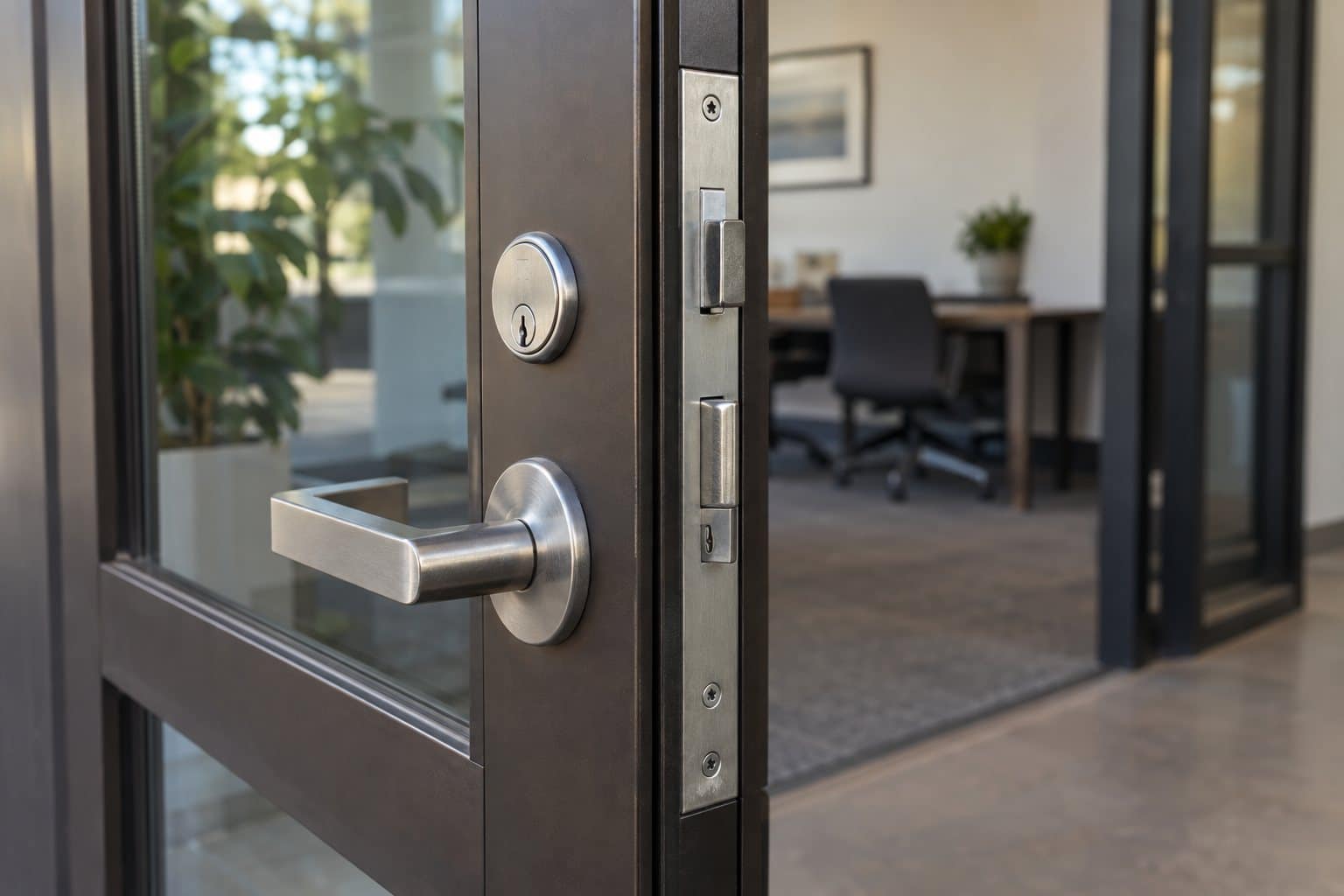
Check the landlord’s system before changing a Denver office lock
A street-facing shop and a suite in a shared downtown office building can have very different access arrangements. In a shared building, the property manager may control exterior doors, elevator access, parking and a master-key system. Your business may only control the suite and interior rooms.
Ask the manager which changes require authorization, whether there is an approved hardware specification and who will revoke shared-building credentials. Put the suite number, authorized contact and any required access window on the work order. A technician arriving after hours needs a way into the building as well as permission to work on the suite.
Security changes must preserve safe exit and the door’s required function. Do not add a padlock, chain or improvised barrier to an occupied exit. Work involving panic hardware, fire-rated doors or electronic release systems needs a qualified assessment of the actual opening and applicable requirements.
For local prevention guidance beyond locks, use the Denver Police Department’s safety and crime-prevention resources. Keep the business’s emergency contact details current through the appropriate building and alarm contacts.
Remove electronic access without overlooking the backup key
An access card, phone credential, keypad PIN and alarm code may belong to different systems. Ask each system administrator to confirm what was removed, when it was removed and whether any update is still pending. Include administrative accounts if the departing employee managed the locks or could issue credentials to other people.
Do not assume that an online dashboard proves every door is updated. A disconnected controller or standalone lock can require a different update process. Follow the system’s instructions, verify its status and have an authorized administrator perform a controlled access test where practical. Preserve relevant logs under your business’s retention policy before removing records.
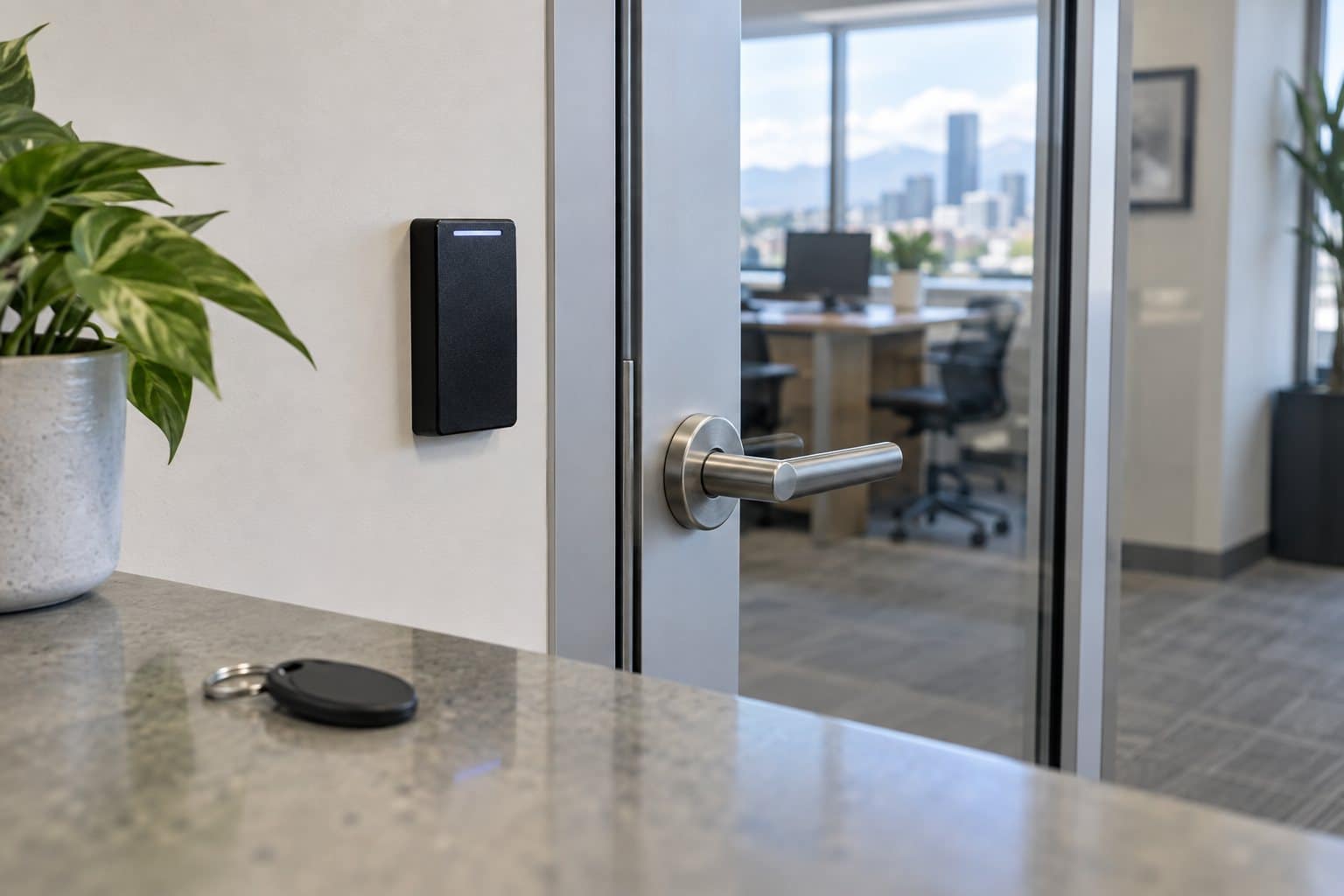
A mechanical override cylinder remains a separate route into many electronically controlled doors. Removing the card does not change that cylinder. Conversely, rekeying the cylinder does not cancel the card. Check both when a person held both forms of access.
If repeated staff changes make shared keys or codes difficult to manage, discuss commercial access-control installation. Individual credentials can make future changes easier, but only when someone is responsible for maintaining user lists, backup access and system operation.
A simple worksheet for the manager handling the departure
Use one row per opening or system. Record credential identifiers rather than active codes. The example below illustrates the process; it is not a Star-Keys customer case.
| Opening or system | Who handles it | Evidence of completion |
|---|---|---|
| Shared lobby and parking | Property manager | Building credential removal confirmed, including parking access. |
| Office suite and rear door | Authorized manager and locksmith | Affected cylinders identified; new key plan tested and documented. |
| Stockroom or records room | Office manager | Key scope reviewed; required changes and authorized users recorded. |
| Alarm and remote-access app | Alarm provider or system administrator | User removed; shared secrets changed where appropriate; contact list updated. |
| Opening shift | Shift supervisor | Replacement access issued and tested before the next start time. |
Finish with a physical walk-through. Confirm that doors close and latch without being forced, replacement keys operate the intended locks and interior exit hardware works correctly. Have someone remain inside or retain another authorized way in during testing. Record unfinished items instead of marking the whole handover complete because one front-door test passed.
What to have ready for a commercial locksmith quote
Share the Denver service address, suite number, number of affected doors, known lock brands and whether a master key is involved. Explain whether keys are missing, hardware is damaged or the door is currently unsecured. Have identification and documentation of your authority available.
Ask for an itemized scope covering the visit, assessment, cylinder work, replacement parts if needed, new keys and any after-hours charge. A multi-door master-key job differs from rekeying one ordinary cylinder, so a fixed price without those details may not describe the work you need. Confirm availability and the estimate before work begins.
Star-Keys provides commercial locksmith service in Denver for businesses that need help with locks, keys and access planning. Call (303) 747-6324 with the door details and the access you need to remove.
Questions Denver business owners ask about unreturned office keys
Should I rekey if an employee returns the original key?
A returned key closes the inventory item, but it does not prove that no copy exists. Base the decision on your key-control policy, the type of key, records of authorized copies and the areas it opens. Where key distribution is uncertain, rekeying the affected cylinders is a way to establish a new controlled key set. Apply a consistent process to departures rather than assuming misconduct.
Can a locksmith rekey the office if the key is missing?
Often, but the approach depends on the cylinder, its condition and whether the door is accessible. The locksmith will need to verify your authorization and inspect the hardware. Restricted or building-controlled systems may also require the property manager or the authorized system provider. Mention the missing key and any access restrictions when booking.
Do all the locks in the building need to change?
Not necessarily. The affected scope is the set of locks the missing key operates, plus any other compromised access. A single-room key may involve a limited change; a master key can involve many openings. Have the locksmith verify the key relationships before deciding. Do not assume that rekeying the main entrance resolves access to a rear door or a separately accessible suite.
Is deactivating the employee’s fob enough?
Only if it removes all of that person’s relevant entry methods, which needs checking. Review mobile credentials, PINs, parking access, alarm permissions and any physical override keys. Confirm that the deactivation reaches each applicable controller or lock. A fob can be disabled while a shared PIN or a mechanical key still opens the same door.
Can we keep using one keypad code for the entire staff?
You can operate some systems that way, but a shared code makes individual access changes harder. Everyone using it needs the replacement whenever the code changes, and logs may identify only the shared credential. Where the system supports it, give staff individual credentials, limit them to the doors and hours they need, and assign someone to remove them at departure.
Can office locks be rekeyed after closing?
Ask about availability and building access when arranging service. After-hours work can reduce disruption, but it still needs an authorized person, any landlord approval and a plan for distributing new keys. Confirm whether special cylinders or parts must be ordered. Test the completed work before leaving so the opening team does not discover an access problem the next morning.
Will a “Do Not Duplicate” stamp prevent extra copies?
The wording alone is not the same as a controlled key system. Ask what restrictions the actual keyway, supplier authorization process and current product protections provide. Even a restricted system needs accurate issuance records and a response plan for missing keys. Do not treat any stamp as proof that every copy is accounted for.
What can reduce the cost of the next employee key change?
Start with a reliable key register and avoid issuing broad master access when a limited key will do. At the next hardware review, ask whether compatible interchangeable cores or individually managed electronic credentials fit the premises. Compare installation, administration and maintenance costs as well as the cost of a future change. The right choice depends on turnover, door hardware and building rules.
Call Star-Keys Locksmith: (303) 747-6324
Published by Star-Keys Locksmith. Images are AI-generated illustrations of example premises and hardware, not photographs of customer jobs. System-specific changes should follow the manufacturer’s instructions.