

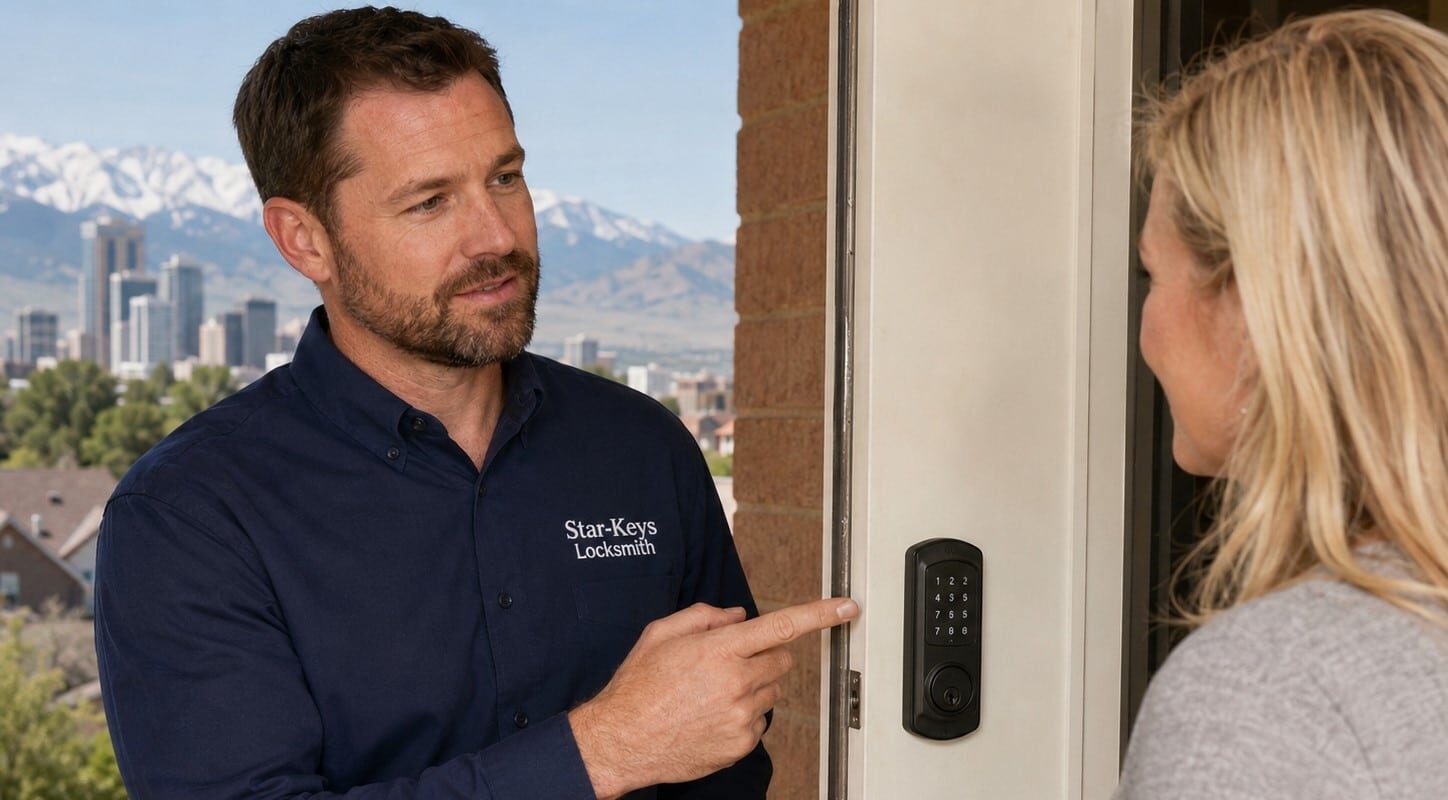
After a break-in in Denver, get to a safe place first. Call 911 if someone may still be inside, a crime is in progress or anyone is in immediate danger. For a past incident with no immediate threat, call Denver Police non-emergency at 720-913-2000. Follow police instructions, document the damage when it is safe, and then arrange repairs to the affected locks, doors and windows.
A door that closes again is not necessarily secure. The lock, strike plate, frame and keys all need attention, but they do not always need replacing. This guide helps Denver homeowners and renters separate urgent repairs from optional upgrades and prepare a clear scope of work.
What to do first after discovering a break-in
- Stay out if you are unsure the property is safe. Do not search the rooms or confront anyone. Move away from the entry and tell the dispatcher what you can see from safety.
- Report the incident through the appropriate police channel. Use 911 for an emergency and 720-913-2000 for a past, non-emergency incident in Denver. The Denver District Attorney’s crime-reporting directory lists these contacts. Properties outside Denver should use their own local police department.
- Preserve the scene. Avoid touching handles, moving disturbed items or cleaning up until police tell you how to proceed. If an opening creates an immediate hazard, explain it to the dispatcher and ask how to make it safe without unnecessarily disturbing evidence.
- Photograph damage when police say it is safe. Take a wider photograph of each affected opening and close-ups of the lock, strike, frame and broken glass. List missing items and keys. Keep relevant camera footage in its original form.
- Notify your insurer and, if you rent, your landlord. Ask what documentation they need and how to handle urgent temporary repairs. Keep the incident number, photographs, estimates and receipts together. Coverage and reimbursement depend on your policy.
- Arrange a secure repair plan. Tell the locksmith whether the door closes, whether the frame is split and whether keys are missing. A damaged window or structural door frame may also need a glass or door-repair contractor. If the property cannot be secured safely, arrange somewhere else to stay.
For lock assistance once it is safe to begin work, call Star-Keys Locksmith at (303) 747-6324. Confirm current availability, the likely arrival window and the scope of the visit before booking.
Check three separate problems: damage, keys and electronic access
1. Damage to the door assembly
A working key does not prove that a forced door is secure. A bolt needs a sound strike and frame to engage properly. Ask for the lock, hinges, strike, jamb and door edge to be assessed together. A lock fitted to a split frame cannot compensate for that damage.
Conversely, a damaged frame does not automatically mean an undamaged lock must be discarded. The repair decision should follow inspection. Ask the technician to identify what failed, which parts can be retained and which need repair or replacement.
2. Missing or exposed keys
Make an inventory of house keys, garage keys, mailbox keys and vehicle keys that were taken or may have been accessible. Include spares in drawers, bags and vehicles. Identify every lock each missing key operates; a back-door key may also open the front door or detached garage.
Rekeying compatible, undamaged locks changes their key combination so the old key no longer works. Replacement with a new key combination is another option. Rekeying does not repair a damaged lock or strengthen a broken frame.
3. Codes, apps and remotes
Review keypad codes, shared smart-lock accounts and garage remotes separately. Remove access you no longer control and follow the device manufacturer’s instructions for lost remotes or credentials. If a phone was taken, protect the account that controls the lock as well as the device itself.
Many smart locks have a mechanical backup cylinder. Changing a PIN will not stop an old physical key from opening that cylinder. Likewise, rekeying the cylinder does not remove app access. Check both paths.
Should you rekey or replace locks after a break-in?
Use the condition of the door and the status of its keys to guide the decision. Avoid paying for a replacement that leaves the original weakness unresolved.
| What you find | Practical next step | What it does not solve |
|---|---|---|
| Lock works properly, but a key is missing or may be copied | Rekey compatible hardware or replace it with a new key combination. | Neither action repairs damage elsewhere in the door. |
| Cylinder or bolt is visibly damaged or operation is unreliable | Have the damage assessed; repair or replace affected hardware as appropriate. | Rekeying alone does not restore damaged parts. |
| Jamb or strike area is split | Restore the frame and strike anchoring, then assess the lock. | A new deadbolt alone cannot restore a broken frame. |
| Entry was through a window; door locks are intact | Repair the window and review whether keys or credentials were exposed. | Replacing intact door locks does not repair the window. |
| Keys are accounted for and locks are sound | Assess the actual entry point and other accessible openings. | A burglary does not automatically make every lock defective. |
| Shared PIN, phone or remote is compromised | Revoke or change affected electronic access and check backup keys. | A code change does not disable a mechanical key. |
When hardware cannot be restored reliably, discuss lock replacement options that fit the existing door. Ask whether the estimate includes parts, installation, adjustments and new keys.
Plan repairs around your Denver property
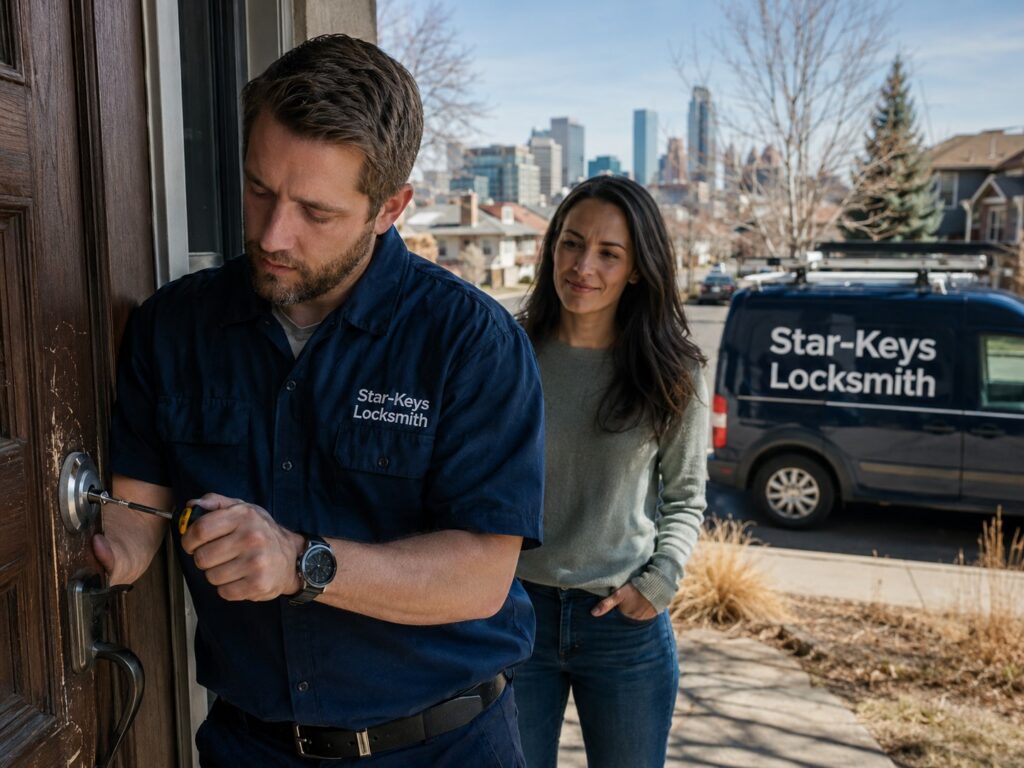
An older wood entry door, an apartment fire door and a sliding patio door require different repair methods. Choose work based on the actual opening, rather than assumptions about crime patterns in a particular neighborhood.
For a damaged wood frame: ask whether the strike still anchors into sound material. Reinforcement and fasteners must suit the assembly and the manufacturer’s instructions. A universal screw length is not a substitute for assessing the damage.
For an apartment or rental: contact the property manager before changing landlord-controlled locks. Explain urgent damage immediately. Coordinate key access and any work affecting a rated door, common entry or shared system.
For a window or patio-door entry: check the glazing, frame, latch and track. Ask the appropriate contractor to restore the opening. Do not add a barrier that prevents occupants from using a required exit.
A residential locksmith in Denver can help assess lock-related work. Confirm separately who will complete structural repairs, glazing or boarding if those services are needed.
What to send when requesting a locksmith estimate
- Your location and whether police have cleared the property for repairs.
- Photographs of the door, lock, strike and frame, taken safely.
- Whether the door opens, closes and latches without force.
- The number of affected doors and which ones share a key.
- Any missing keys, remotes, phones or access credentials.
- Whether you own the property or have the owner’s authorization.
- The immediate objective: secure an opening, restore key control or replace damaged hardware.
Request an itemized estimate and ask about the service-call charge, labor, parts and any after-hours cost. If the inspection changes the recommended work, agree to the revised scope before it begins. Keep the invoice with your incident documentation.
Choose useful security improvements after the urgent repair
Start with the opening that failed, then inspect other exterior doors and accessible windows. A sound door, correctly fitted hardware and a secure frame work together. No single deadbolt, cylinder or smart device makes a home break-in-proof.
If stronger hardware is appropriate, compare compatible products and their tested ratings. Ask how a proposed high-security lock upgrade addresses your specific concern. A stronger cylinder and a stronger frame address different weaknesses.
If you prefer codes or app control, discuss smart-lock installation with attention to backup entry, batteries, account security and who can issue credentials. Activity logs vary by product and setup; they may not record every physical opening or identify the person who used a shared code.
Finish by recording who holds each new key, limiting spare-key access and testing the repaired door from both sides. Make sure everyone in the household can exit safely without a new obstruction.
Frequently asked questions about a break-in in Denver
Should I call 911 if I discover a burglary after it happened?
Call 911 if there is immediate danger, someone may still be inside or the crime is ongoing. If it is a past incident and there is no immediate threat, call Denver Police non-emergency at 720-913-2000 for reporting guidance. Do not enter or search an unsafe property to decide which number to use.
Do I need new locks if the burglar entered through a window?
Not automatically. Repair the window and assess whether keys or electronic credentials were exposed. If a house key is missing or may have been copied, rekeying compatible, undamaged locks can restore key control without replacing all the hardware. Include every lock that key operates in the assessment.
Can I keep a deadbolt if the door frame was damaged?
Possibly, if inspection finds the deadbolt sound and suitable for the repaired door. The frame and strike must be restored so the bolt can engage securely. A key that still turns is not enough evidence that the whole assembly is safe.
Can a locksmith repair the entire damaged doorway?
The scope depends on the damage and the provider. Lock and strike work may be handled during a locksmith visit, while structural framing, a replacement door or broken glass may require another contractor. Describe the damage before booking and confirm who will handle each part. Do not assume boarding or carpentry is included.
How quickly can Star-Keys Locksmith arrive?
Call (303) 747-6324 for current availability and an estimated arrival window for your address. Explain whether the door can be secured and whether police have cleared the scene. Travel conditions, technician availability and the required hardware can affect timing; confirm the plan directly when booking.
Will insurance pay for rekeying or replacing the locks?
Coverage depends on your policy and the circumstances. Ask your insurer what it will cover and what evidence it needs before authorizing non-urgent upgrades. Photograph the damage, retain the incident number and keep itemized invoices. Do not assume an optional upgrade will be reimbursed as part of a necessary repair.
Does changing a smart-lock code make a stolen key useless?
No. A code change affects electronic access, while a mechanical backup key works through a separate cylinder. If that key is compromised, assess rekeying or replacing the cylinder as well. Review app users, shared accounts and remotes so that all affected access methods are addressed.
How should I check a locksmith before booking?
Confirm the business name, contact details, service area and who will perform the work. Request clear pricing and an invoice identifying the services supplied. If a provider claims a particular license, certification or insurance coverage, ask for the exact credential and verify it with the issuing organization. Avoid relying on a generic licensing claim or an unsupported promise of a fixed arrival time.
Need help with the locks after a break-in? Call Star-Keys Locksmith: (303) 747-6324 to describe the damage and confirm the appropriate next step.